
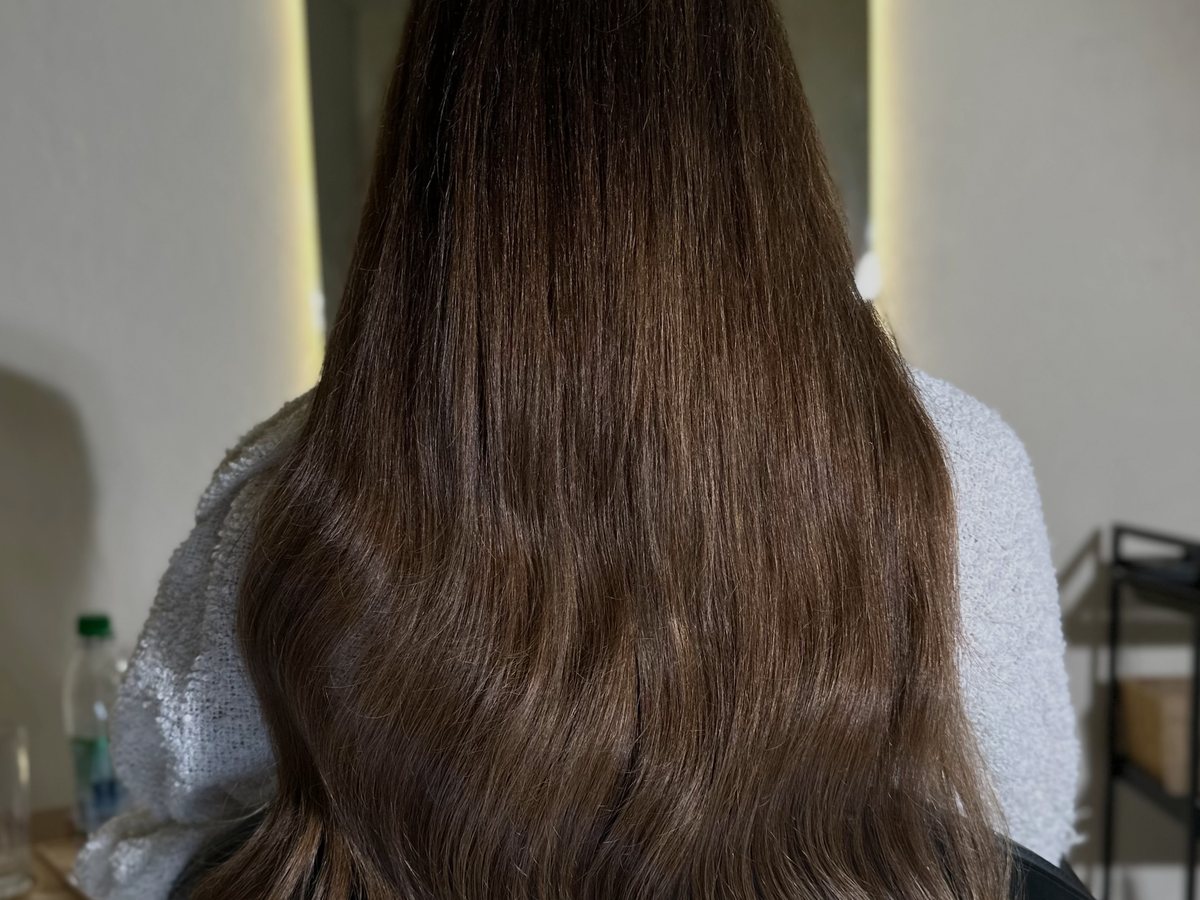
As soon as temperatures drop in Munich and the heating comes on, the questions in our salon change too. Instead of salt water and sun, it's suddenly all about dry ends, tangled nape hair under scarves, and hair that crackles when you pull off your jumper. Extensions are actually a bit more sensitive to the cold season than your natural hair – because they don't get oils and moisture from the scalp. But with a few tweaks to your routine, your keratin bonds will sail through autumn and winter.
Why extensions need more care in winter
Three factors make winter tough on hair:
- Dry heating air: in heated rooms humidity often drops to 30% or less. Hair loses moisture, becomes brittle and builds up static.
- Temperature changes: constantly switching between cold outdoor air and warm rooms stresses the cuticle.
- Friction: hats, scarves, hoods and thick coat collars rub against the hair, especially at the nape – exactly where extensions are most likely to tangle.
Your natural hair is replenished by your scalp. Extensions aren't. That's why the lengths and ends in particular dry out faster in winter.
Moisture, not grease: the right care
- A moisturising conditioner after every wash – lengths and ends only, never on the bonds.
- A mask once a week on the lengths; leave for 5–10 minutes and rinse thoroughly.
- A light leave-in spray on the lengths after washing. It protects against dryness and makes combing easier.
- One or two drops of hair oil on dry ends – sparingly, and well away from the bonds. Too much oil makes the bonds slippery.
For the basics of washing, see our everyday aftercare guide.
Hats, scarves and hoods: how to prevent tangles
The nape is problem zone number one in winter. Under a scarf the hair rubs back and forth constantly – right where the lowest rows of bonds sit. My tips:
- Don't trap your hair under your scarf. Either wear it over the top or tie your hair loosely in a low ponytail.
- Silk or satin lining in hats noticeably reduces friction and static. You can buy satin-lined hats, or wear a thin satin scarf underneath.
- Avoid wool directly against your hair. Rough wool is a tangle magnet. Cashmere or a smooth collar is gentler.
- Don't wear hats too tight. A tight band presses constantly on the top bonds.
- Brush out the nape in the evening, section by section, while holding above the bond.
Taming static
Flyaway, crackling hair is a winter classic. What helps:
- a natural-bristle brush or a dedicated extension brush instead of plastic,
- a touch of leave-in or anti-frizz spray on the lengths,
- a humidifier in the bedroom – good for hair, skin and sinuses,
- loosely braiding your hair for sleep, on a silk pillowcase.
Never go out with wet hair
In winter this matters more than ever: blow-dry your hair completely before leaving the house – especially the root area with the bonds. Damp hair becomes brittle in the cold, and moisture trapped at the bonds under a hat and scarf for hours encourages tangling and scalp problems. Blow-dry on a medium setting and use heat protection.
Heat styling in winter
Spending more time indoors often means reaching for the straightener or curling iron more. With keratin bonds that's fine, as long as you:
- always use heat protection,
- keep the temperature moderate (160–180 °C is usually enough),
- don't run the tool directly over the bonds,
- plan at least one or two heat-free days a week.
Sauna and thermal baths in winter
The sauna is generally fine with keratin bonds. Tie your hair up loosely, protect it with a towel or sauna hat and skip very long, frequent sessions. After a thermal bath, rinse your hair well – minerals and chlorine dry the lengths out even more.
Plan maintenance before the holidays
Many clients want to look their best at Christmas and New Year – and that's exactly when appointments are scarce. Schedule your maintenance one to three weeks before the holidays. Then the bonds sit fresh at the root and your hair looks perfect in every photo. If you'd also like to go darker for autumn, combine the appointment with the colour change – more in our article on colouring and toning.
Your winter checklist
- Moisturising conditioner every wash, mask once a week.
- Leave-in and a little oil on the ends.
- Always blow-dry completely before going out.
- Scarf over your hair, or hair loosely tied.
- Satin lining in your hat, silk pillowcase in bed.
- Gently brush out the nape every day.
- Book maintenance early before the holidays.
Common questions
Do I need maintenance more often in winter?
Not necessarily. But if you notice small knots forming at the nape more quickly, it's worth booking maintenance closer to six weeks than eight.
Does a humidifier really help?
Yes. Even 40–50% humidity in the bedroom noticeably reduces static and split ends. Bowls of water on the radiator or houseplants help too.
Can I go skiing with extensions?
Of course. Braid your hair loosely under your helmet or hat, protect the lengths with a leave-in and wash out sweat and moisture thoroughly in the evening.
Our takeaway
Autumn and winter are no problem for extensions as long as you tackle the three big enemies: dry air, friction and moisture trapped under hats and scarves. With moisturising care, satin instead of wool and thorough blow-drying, your keratin bonds stay smooth and your hair stays glossy – until spring and beyond.