
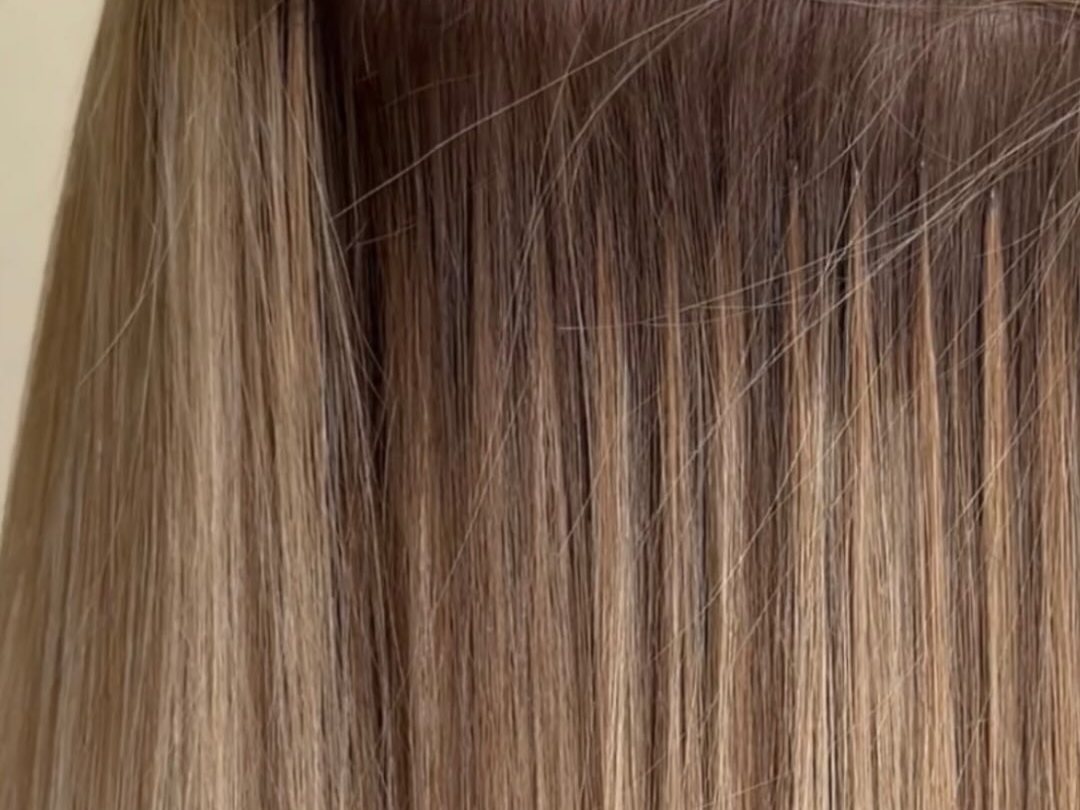
When you first look into hair extensions, you quickly run into a confusing range of options: bonds, micro rings, nano rings, wefts, tapes, clip-ins… Every method has its fans, and naturally every salon thinks its own is best. We've already covered keratin bonds vs. tape-ins in detail in a separate article. Here I'd like to give you an honest overview of all the common methods – including who each one really suits.
1. Keratin bonds (hot fusion)
How it works: small strands of hair with a keratin tip are attached to individual sections of your own hair with a heat clamp and rolled by hand into flat bonds.
- Wear time until maintenance: 6–8 weeks, up to about 3 months at most.
- Invisibility: very high when the bonds are small and colour-matched – even in ponytails and updos.
- Strain: low, as the weight is spread over many small points.
- Styling freedom: excellent – the hair moves naturally in every direction.
- Suits: almost all hair types, including fine hair with micro bonds.
This is the method we specialise in at Shanta Hair – with hand-made, extra-small bonds.
2. Micro rings / nano rings (cold fusion)
How it works: the extension strand and a section of natural hair are threaded through a tiny metal ring, which is clamped shut with pliers. Nano rings are even smaller.
- Pros: no heat, no keratin. The rings can be opened to move them up and reused.
- Cons: the rings are harder than keratin bonds and can press when you lie down. On straight, fine hair they slip more easily. If a ring is clamped too tight, it can kink the hair.
- Visibility: easy to hide, but the rings can be felt and are sometimes visible in very fine hair.
- Maintenance: often every 6–8 weeks.
3. Wefts (sewn or glued)
How it works: hair is sewn into a long "curtain" (weft). It's either sewn onto a braided track, attached to a row of micro rings, or – with hand-tied wefts – fixed to a row of beads.
- Pros: lots of hair in a short time, especially for very thick, strong hair. Volume at the back of the head builds up quickly.
- Cons: the weight is concentrated on a few rows. On fine hair this can pull considerably. High ponytails and updos are limited because the weft lines show.
- Suits: thicker, dense hair – and clients who mostly wear their hair down.
4. Tape-in extensions
How it works: flat strands with adhesive strips are sandwiched around a thin section of natural hair.
- Pros: quick to apply, lie flat against the head.
- Cons: the adhesive reacts to oils, heat and sweat; wide tapes show in updos. Maintenance is often needed after 6–8 weeks.
The full side-by-side comparison: keratin bonds vs. tape-ins.
5. Clip-in extensions
How it works: wefts with small clips that you put in yourself in the morning and take out at night.
- Pros: no constant strain, no salon appointment, flexible for special occasions.
- Cons: daily effort, not suitable for sleeping or sport, clips can show through fine hair. Clipping in and out often stresses the same spots every time.
- Suits: weddings, events, photo shoots – or trying out how you like more length.
The comparison at a glance
- Most invisible day to day: small keratin bonds.
- Fastest to apply: tape-ins and wefts.
- No heat or adhesive: micro rings.
- Lots of volume for very thick hair: wefts.
- No permanent attachment: clip-ins.
- Gentlest on fine hair: micro keratin bonds with a carefully chosen number of grams.
What matters regardless of method
Honestly, the method is only part of the result. Badly done bonds can do more harm than well-done wefts – and vice versa. What always matters:
- Hair quality – more in our article premium vs. cheap human hair.
- The right amount relative to your natural hair – see our grams guide.
- The stylist's experience with that exact method.
- Regular maintenance and good aftercare at home.
Why we chose keratin bonds
After more than 11 years and plenty of techniques tried, I've stuck with hand-made keratin bonds because they give most of our clients the best overall package: they're invisible day to day, even in a ponytail. They allow sport, sauna and holidays. They can be sized precisely for fine or thick hair. And quality hair can be re-bonded several times at maintenance. For special occasions without a permanent commitment, I'm happy to recommend clip-ins as an addition.
Common questions
Can I switch from tape-ins or wefts to keratin bonds?
Yes. We gently remove your current extensions, check the condition of your natural hair and then apply bonds. Whether your existing hair can be re-bonded depends on its quality – we'll look at that together at the appointment.
Which method lasts longest?
With every permanent method, maintenance is due after 6–8 weeks because your hair grows. Overall longevity depends mostly on hair quality: good hair survives several maintenance appointments, whatever the method.
Which method is cheapest?
Clip-ins, since no salon appointment is needed. Among permanent methods the differences are smaller than you'd think – the price of the hair is usually what decides it.
Our takeaway
There's no perfect method for everyone – but there is a right method for you. If invisibility, natural movement and protecting your own hair matter to you, small keratin bonds are the best choice in most cases. If you're unsure, talk openly in your consultation about your daily routine, how you like to wear your hair and your budget. A good stylist will then honestly recommend what suits you.